
Storm Restoration Monsoon & Haboob Recovery
Monsoon microbursts, haboob dust storms, and wind-driven rain punch through flat roofs, skylights, and stucco cracks across Tucson. We tarp, extract, dry, and rebuild—stopping secondary mold while you wait for permanent roof repairs.
Monsoon & Storm Damage Restoration in Tucson
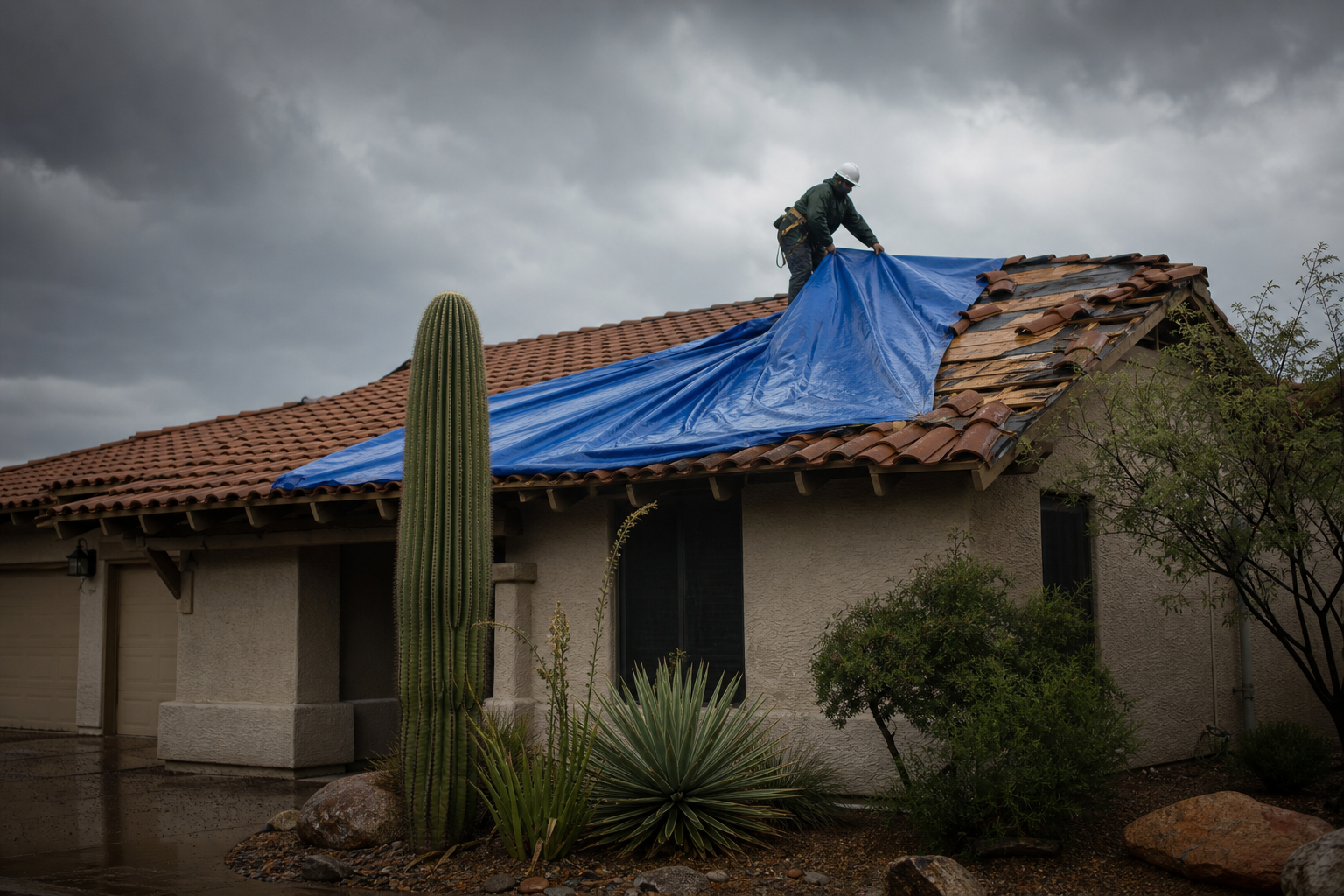
Southern Arizona monsoon season brings intense rain, hail, and dust in short bursts that overwhelm drainage and roofing systems. Flat foam roofs pond water; scuppers clog with desert debris; and wind drives rain horizontally through stucco cracks on Catalina Foothills hillside homes. Storm restoration combines emergency weatherproofing with water extraction and structural drying.
Haboobs deposit fine dust into roof drains and HVAC intakes—secondary damage appears when the next rain cannot drain or when dust-laden filters restrict airflow and cause condensate issues. We address water first, then coordinate cleaning and odor treatment when dust and moisture mix in attics.
Emergency Tarping & Board-Up
Roof tarps heat-sealed and mechanically anchored prevent additional monsoon rounds from soaking insulation while roofers schedule permanent repairs. Board-up protects broken windows from security risks and further water entry in vacant properties.
Commercial strip malls along Oracle and retail in Foothills Mall area receive after-hours tarp crews to protect inventory when ceiling tiles collapse from ponding. Interior commercial restoration begins as soon as the roof is secure, phased so tenants keep operating under the sections of ceiling grid that survived.
Water Extraction After Storm Intrusion
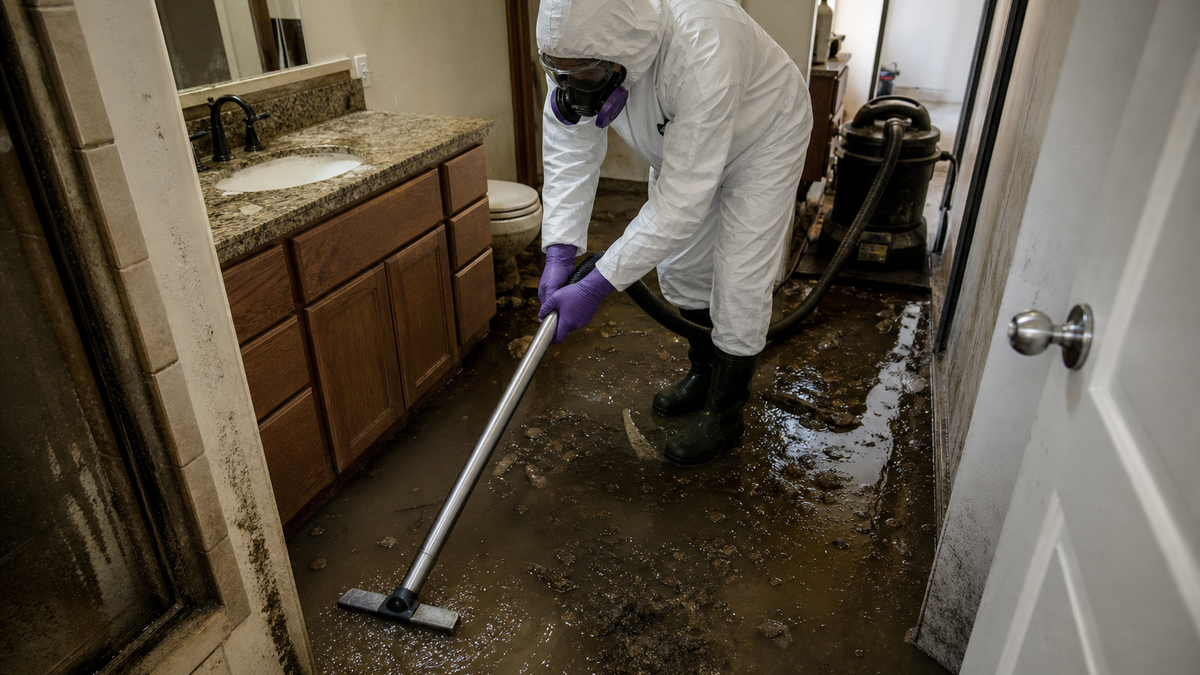
Wind-driven rain often creates shallow but widespread floor water—we deploy hard-surface extraction tools and remove wet carpet pad when Category 1 storm intrusion saturates flooring. Ceiling collapses from attic insulation weight require contained demo before drying air movers can circulate in wall cavities.
Multi-story townhomes in Oro Valley may see stacked unit damage; we extract from top-down and establish per-floor drying plans documented for insurance claims. When a wash overtops and pushes street water indoors, the job reclassifies from storm intrusion to flood cleanup with Category 3 handling from the first hour.
Structural Drying & Mold Prevention
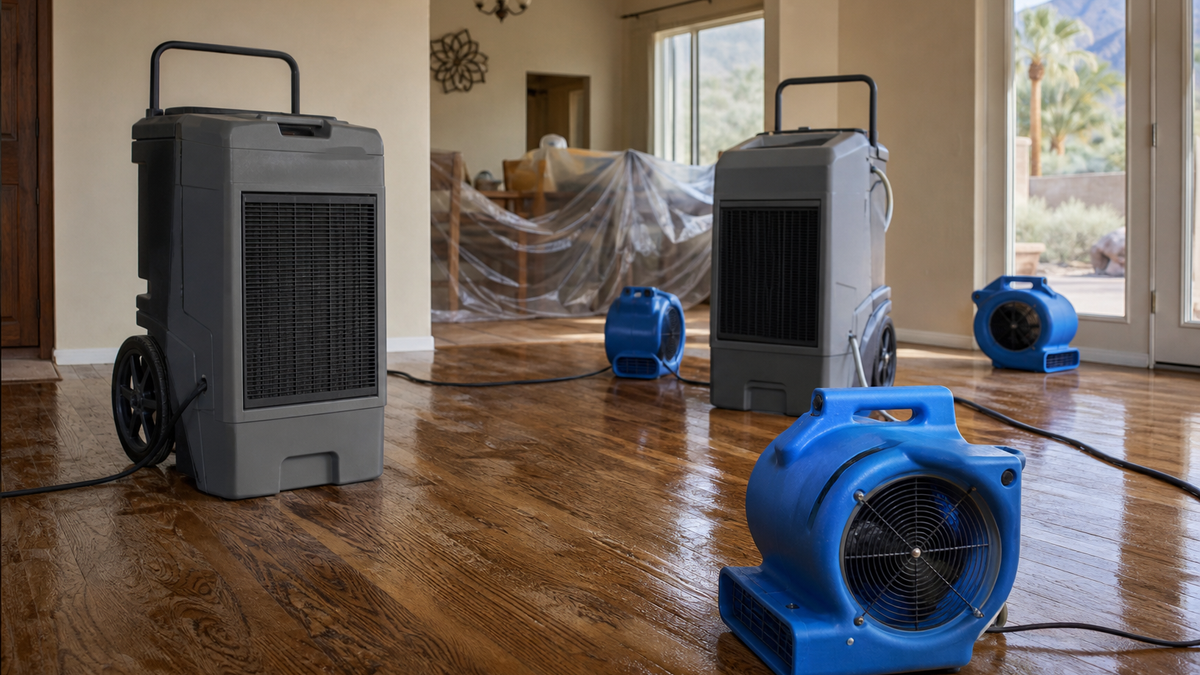
Monsoon humidity spikes outdoors, so we rely on closed drying systems with dehumidifiers—not open windows—during July and August. Daily moisture logs prove dry standard to adjusters and prevent mold remediation later.
Adobe and double-stucco walls hide slow-drying mass; extended monitoring prevents premature paint and texture that traps moisture.
Hail & Wind Structural Assessment
Hail bruises foam roof membranes; wind lifts flashing at parapets. We photo-document exterior conditions and coordinate licensed roofers while managing interior water damage restoration.
Fallen tree limbs on carports and patio covers puncture roofing; temporary patches stabilize until structural engineers clear load-bearing damage in severe cases.
Dust & HVAC Contamination
Post-haboob dust inside ducts and swamp cooler pads reduces efficiency and causes musty odors when humidified. Filter replacement, coil cleaning, and duct access cleaning integrate with storm recovery plans.
Air quality testing verifies particulate reduction after major dust intrusion events.
Commercial Storm Response
Hotels, medical clinics, and schools need phased restoration to maintain partial operations. Safety barricades, slip hazard signage, and coordinated night work minimize business interruption across Pima County.
We maintain relationships with temporary power and fencing vendors when monsoon outages and security concerns overlap.
Working With Insurance After Monsoon Events
Monsoon claims spike regionally—early documentation with timestamps, weather references, and photo sequences helps adjusters process Tucson losses faster. Separate wind, water, and mold line items clarify coverage questions.
You choose your restoration contractor; we provide Xactimate-compatible scopes and direct adjuster communication when authorized.
Monsoon Microburst Patterns
Microbursts dump inches of rain in minutes on neighborhoods while adjacent blocks stay dry—insurance adjusters need timestamped photos tied to NWS storm reports. We document arrival conditions and worsening interior damage across successive storm nights when tarps fail in wind.
Flat roof ponding collapses ceilings in commercial buildings when scuppers clog with palo verde blossoms and haboob dust. Extraction and drying proceed simultaneously with roof drainage clearing coordinated through building maintenance.
Haboob Dust & Combined Damage
Dust storms alone rarely cause water damage but clog drains and HVAC filters before the next rain. Combined dust-plus-water events coat wet insulation with mud-like slurry that holds moisture longer than clean rainwater alone. Insulation removal and HEPA cleaning precede drying in heavy dust-intrusion attics.
Odor treatment addresses earthy smells when dust and moisture mix in return plenums. Filter upgrades to MERV ratings compatible with system specs reduce repeat dust loading during haboob season.
Temporary Repairs vs. Permanent Restoration
Tarps and board-up are temporary—interior restoration must complete before mold develops regardless of roof contractor backlog. We communicate realistic interior timelines separate from permanent roofing schedules stretching weeks in regional monsoon backlogs.
Document temporary and permanent repairs separately for insurance—some carriers treat tarp and mitigation as covered while roof wear items fall under maintenance exclusions. Claim assistance clarifies line items without blurring sudden storm damage with pre-existing roof age issues.
Community-Wide Event Response
Regional monsoon nights generate dozens of simultaneous calls—we prioritize active interior flowing water over cosmetic exterior damage. Pima County HOA communities in Oro Valley and Rita Ranch receive coordinated response when multiple units share rooflines affected by single storm cells.
We stock extra tarps, fans, and dehumidifiers July through September. Customers receive honest ETAs during surge events—not false promises of instant arrival when entire corridors of Tucson need help at once.
Local Expertise for Storm Restoration in Tucson
From Catalina Foothills and Oro Valley to Marana, Rita Ranch, Green Valley, and central Tucson barrios, Pima County homes combine stucco exteriors, slab foundations, evaporative coolers, and long cooling seasons that stress plumbing and roofing. Monsoon microbursts, AC condensate overflows, and vacant snowbird properties closed through humid summer weeks create moisture problems despite desert reputation for dryness. Storm Restoration in this environment requires contractors who understand adobe additions, foam flat roofs, rooftop package HVAC, and hard-water scale attacking copper lines—not generic national playbooks written for humid coastal climates.
We dispatch from greater Tucson with equipment sized for ranch homes, hillside multi-level builds, and commercial tenant spaces along Oracle, Grant, and Broadway corridors. Response targets 60–90 minutes for emergencies when crew capacity allows during monsoon surges affecting entire neighborhoods simultaneously.
Desert humidity swings and hard-water plumbing mean the same home can suffer AC condensate floods in August and pipe pinholes in January—we plan mitigation for year-round failure modes, not single-season shortcuts.
Standards, Documentation & Next Steps
Our work aligns with IICRC S500 water restoration and S520 mold remediation standards recognized by insurers, industrial hygienists, and property managers statewide. Daily moisture documentation, HEPA filtration, and correct water category handling separate professional mitigation from consumer fans-and-bleach attempts that spread contamination or leave wet cavities mold-ready within 72 hours. Whether you need insurance documentation, third-party clearance, or fast occupancy restoration, our process produces records adjusters and buyers recognize.
Call (520) 462-0491 for a free visual assessment and plain-language scope. We coordinate with extraction, drying, remediation, and air testing as your loss requires—one coordinated team across Pima County rather than conflicting vendors leaving gaps where mold and odor return next season.
Every job receives photo documentation, moisture readings where applicable, and written recommendations for preventing repeat damage—whether you are a homeowner in Sahuarita, a landlord near UA, or a facility manager overseeing multiple Pima County locations.
When to Call After Monsoon Damage
Active leaks, ceiling bulges, or wet flooring need same-day storm restoration.
Ceiling Stains After Rain
Yellow-brown spots indicate active or recent roof intrusion needing tarp and extraction.
Ponding on Flat Roofs
Visible standing water on commercial roofs precedes interior collapse.
Wind-Driven Rain at Windows
Water at sill plates and carpet edges means stucco or flashing failure.
Haboob Dust in Vents
Restricted airflow and future mold risk when dust meets monsoon moisture.
Fallen Limbs on Structure
Punctured roofing allows immediate water entry at next storm.
Musty Attic After Storm
Wet insulation and sheathing need drying before mold colonizes.
Monsoon Restoration Workflow
Weatherproof first, dry thoroughly, rebuild last—before mold starts.
Secure & Weatherproof
Tarp, board-up, and stop additional water intrusion from monsoon rounds.
Extract & Stabilize Interior
Remove standing water and demo unsalvageable wet materials.
Dry & Monitor
IICRC S500 drying with daily logs until structure meets dry standard.
Clean, Rebuild & Document
HEPA clean, coordinate roof repairs, and finalize insurance documentation.
Why Monsoon Season Damages Tucson Properties
Short intense storms expose maintenance gaps on roofs and drainage.
Clogged Roof Drains
Desert debris blocks scuppers on flat roofs during intense rain rates.
Failed Skylight & Flashing Seals
Aging seals leak under wind-driven monsoon rain.
Stucco Cracks & Parapet Issues
Horizontal rain penetrates exterior walls in Foothills homes.
Inadequate Site Drainage
Hard monsoon rain overwhelms grading toward slab foundations.
Haboob Debris Loading
Dust clogs drains and HVAC, compounding next storm damage.
Tucson Monsoon Restoration Leaders
We know haboob dust, flat roofs, and monsoon humidity swings.
Monsoon Season Capacity
Extra crews and equipment staged July through September.
Roof Tarp Specialists
Fast weatherproofing while permanent roofers are backlogged region-wide.
Integrated Water & Mold Teams
Extraction, drying, and remediation under one dispatch—not three vendors.
Insurance-Ready From Hour One
Timestamped photos and moisture logs from first arrival.
Storm Restoration FAQs
What Tucson owners ask after monsoon and haboob damage.
DIY tarps often fail in wind and create trip hazards. Professional heat-sealed tarps buy time safely until roofers arrive.
Wind and rain intrusion are often covered; gradual maintenance issues may be excluded. We document sudden event characteristics.
We prioritize active interior water flow; response targets 60–90 minutes in metro Tucson when capacity allows.
Yes, if materials stay wet beyond 48–72 hours. Extraction and dehumidification prevent most monsoon mold.
We tarp and coordinate licensed roofers; interior drying and rebuild are our core storm restoration services.
Storm Restoration — Greater Tucson
Monsoon emergency service from Marana to Sahuarita.
Microburst storms create neighborhood-wide damage in Rita Ranch and Vail; we deploy multiple crews with tarps and extractors simultaneously.
Catalina Foothills hillside properties face unique wind-driven rain patterns—we stock extension equipment for multi-level access.
Restoration Guides Related to Storm Restoration
Homeowners researching storm restoration in Tucson often need clear timelines, prevention steps, and insurance context. These guides complement our on-site IICRC-aligned work across Pima County.

Explore Our Tucson Restoration Resources
Browse services, local service areas, expert guides, and FAQ answers — organized to help homeowners, landlords, and property managers find the right next step fast.
Located in the Heart of Tucson
Our 5578 S Houghton Rd, Tucson, AZ 85747, USA base lets us reach Catalina Foothills, Oro Valley, Marana, and neighborhoods across Pima County quickly — day or night during monsoon season and every day of the year.