
Attic & Crawl Space Mold Removal in Tucson
Hot Tucson attics and tight crawl spaces trap moisture from roof leaks, evaporative cooler overflow, and bathroom fans vented upward. We remove mold from sheathing and joists, fix ventilation, and prevent spores from entering living spaces through HVAC returns.
Attic & Crawl Space Mold Removal for Tucson Homes
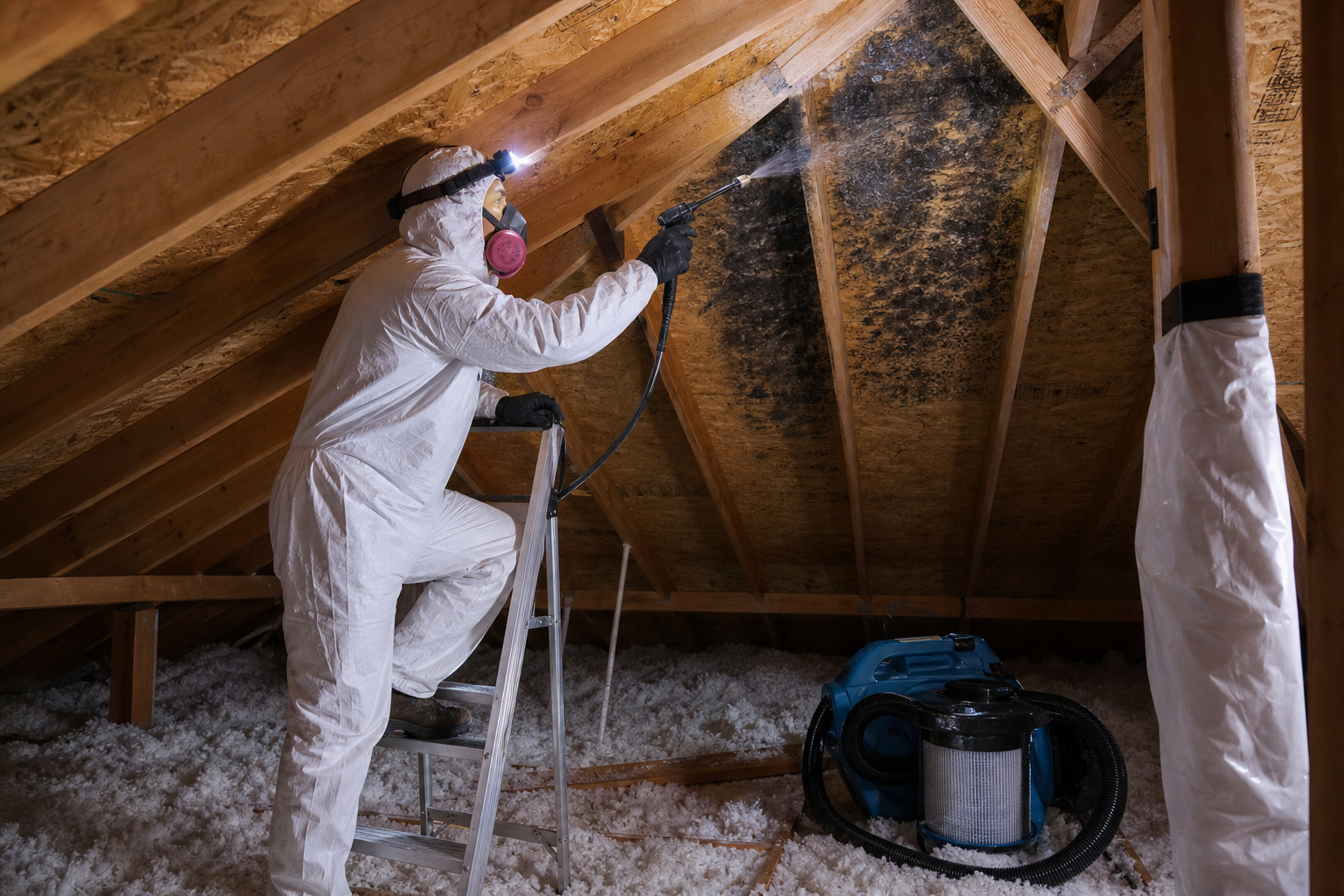
Attics in the Sonoran Desert reach extreme temperatures—but mold still grows when moisture intrudes. Roof leaks during monsoon, condensate from attic-mounted air handlers, and evaporative cooler water lines wet insulation and plywood sheathing. Crawl spaces under raised additions in Foothills homes trap irrigation moisture and condensate from ductwork.
We follow IICRC S520 for confined-space remediation: HEPA filtration, negative air when possible, removal of contaminated insulation, and treatment of salvageable framing. Inspection confirms whether spores have entered living space air through ceiling penetrations and HVAC pathways.
Attic Mold from Roof & Cooler Leaks
Slow roof leaks wet fiberglass batts—compressing R-value and feeding mold on sheathing backside facing living spaces. Swamp cooler overflow pans and distribution leaks are a Tucson-specific culprit; water runs down roof decking before owners notice ceiling stains below.
We remove wet insulation, HEPA-vacuum sheathing, and apply antimicrobial treatment when dry. Roof repairs coordinate before reinsulation—remediation without roofing fix wastes money.
Bathroom Fan Ventilation Mistakes
Fans that terminate in attics instead of through the roof dump humid shower air onto insulation and joists daily. We remediate mold and recommend proper vent routing through roof caps or soffit vents per code—common upgrade in 1970s–1990s Tucson tract homes.
Multiple bathroom vents sharing one attic termination create concentrated moisture zones visible as dark circles on sheathing during attic inspection.
Crawl Space Mold & Ground Moisture
Raised homes in Catalina Foothills and older Oro Valley builds may have crawl spaces with poor vapor barriers. Irrigation overspray, monsoon runoff, and plumbing drips keep soil damp—joist ends and subfloor mold follow.
We remove contaminated vapor barrier, treat joists, install new polyethylene sheeting, and recommend crawl vent or dehumidification strategies suited to desert conditions—not coastal crawl standards copied incorrectly.
HVAC Returns Pulling Attic Air
Return plenums in attics pull unfiltered attic dust and mold spores into living spaces when seals fail. Remediation includes sealing duct connections and replacing filters after attic work completes.
Homes switching between evaporative cooling and AC seasonally need inspection of dampers and duct paths that may harbor dormant mold colonies reactivated by moisture.
Insulation Removal & Replacement
Moldy fiberglass or cellulose insulation is removed bagged and replaced after clearance. Spray foam adjacent to sheathing requires careful evaluation—sometimes trim and treat rather than full removal depending on moisture history.
We advise on R-value appropriate for Tucson attics and radiant barrier compatibility when reinsulating after storm damage.
Confined Space Safety
Attic work in summer demands scheduling for worker safety—early morning starts and hydration protocols. Crawl spaces may have limited clearance, asbestos-era materials, or rodent debris requiring HEPA vacuum before mold work.
Occupants stay out of work zones; negative air exhausts to exterior when roof vent locations allow hose routing.
Prevention for Tucson Attics & Crawls
Annual roof inspection before monsoon, cooler line checks each spring, and bathroom fan routing verification prevent most attic mold callbacks. Crawl spaces need graded drainage away from stem walls and functional vapor barriers.
After water damage, attic inspection confirms no hidden wet insulation above repaired ceilings.
Radiant Heat & Attic Temperature Challenges
Attic work in Tucson summer exceeds 140°F surface temperatures on sheathing—scheduling starts at dawn with hydration protocols and shortened work cycles. Heat does not kill mold on wet wood; it accelerates technician fatigue without completing HEPA vacuum standards. Winter attic work is more comfortable but monsoon leaks often wait until stains appear below.
Radiant barrier foil attached to sheathing requires careful removal and reinstallation when insulation contaminated—improper handling reduces energy efficiency homeowners rely on during long cooling seasons.
Blown vs. Batt Insulation Removal
Blown cellulose and fiberglass require industrial vacuums and bagging—messy without containment at attic hatch. Batt insulation bags more easily but still releases spores if moldy. We seal attic hatches with poly during removal so living spaces below do not receive spore loads when HVAC returns were improperly sealed.
Reinsulation R-value recommendations follow Arizona energy code and homeowner budget—spray foam decisions involve separate contractors when encapsulation is desired after remediation in Foothills custom builds.
Crawl Space Vapor Barriers in Desert Soil
Desert crawl spaces need vapor barriers on ground even when outdoor humidity is low—irrigation and monsoon runoff keep soil damp beneath raised floors. Six-mil polyethylene overlapped and sealed to stem walls reduces ground moisture migration. Crawl vents vs. sealed crawls depend on construction era and local practice—we recommend per site conditions not coastal templates.
Rodent damage to vapor barriers and insulation requires exclusion repair alongside mold removal on joists—otherwise reinfestation continues.
Post-Remediation Attic Ventilation Upgrades
Soffit and ridge vent balance matters—blocked soffits by insulation cause sheathing mold recurrence. We note ventilation deficiencies in reports for roofers to correct when installing new shingles after storm damage. Powered attic ventilators may help when passive ventilation insufficient on low-slope roofs common in mid-century Tucson subdivisions.
Air testing after attic remediation confirms spore counts normalized before reinsulating and restoring HVAC returns that pull from attic spaces.
Local Expertise for Attic & Crawl Space Mold in Tucson
From Catalina Foothills and Oro Valley to Marana, Rita Ranch, Green Valley, and central Tucson barrios, Pima County homes combine stucco exteriors, slab foundations, evaporative coolers, and long cooling seasons that stress plumbing and roofing. Monsoon microbursts, AC condensate overflows, and vacant snowbird properties closed through humid summer weeks create moisture problems despite desert reputation for dryness. Attic & Crawl Space Mold in this environment requires contractors who understand adobe additions, foam flat roofs, rooftop package HVAC, and hard-water scale attacking copper lines—not generic national playbooks written for humid coastal climates.
We dispatch from greater Tucson with equipment sized for ranch homes, hillside multi-level builds, and commercial tenant spaces along Oracle, Grant, and Broadway corridors. Response targets 60–90 minutes for emergencies when crew capacity allows during monsoon surges affecting entire neighborhoods simultaneously.
Desert humidity swings and hard-water plumbing mean the same home can suffer AC condensate floods in August and pipe pinholes in January—we plan mitigation for year-round failure modes, not single-season shortcuts.
Standards, Documentation & Next Steps
Our work aligns with IICRC S500 water restoration and S520 mold remediation standards recognized by insurers, industrial hygienists, and property managers statewide. Daily moisture documentation, HEPA filtration, and correct water category handling separate professional mitigation from consumer fans-and-bleach attempts that spread contamination or leave wet cavities mold-ready within 72 hours. Whether you need insurance documentation, third-party clearance, or fast occupancy restoration, our process produces records adjusters and buyers recognize.
Call (520) 462-0491 for a free visual assessment and plain-language scope. We coordinate with extraction, drying, remediation, and air testing as your loss requires—one coordinated team across Pima County rather than conflicting vendors leaving gaps where mold and odor return next season.
Every job receives photo documentation, moisture readings where applicable, and written recommendations for preventing repeat damage—whether you are a homeowner in Sahuarita, a landlord near UA, or a facility manager overseeing multiple Pima County locations.
When Attic or Crawl Mold Needs Removal
Stained sheathing, musty HVAC air, or wet insulation require professional confined-space remediation.
Dark Stains on Attic Sheathing
Often mold on plywood backing facing insulation—common after slow roof leaks.
Musty Smell When AC Runs
Return air from attic spaces may distribute attic mold spores indoors.
Compressed or Wet Insulation
Flat pink batts indicate past water—inspect sheathing beneath immediately.
Crawl Space Odor
Earthy smell under floors suggests joist or subfloor mold from ground moisture.
Cooler Water Stains on Roof Deck
White mineral trails near cooler mounts signal chronic overflow wetting.
Visible Mold on Floor Joists
Crawl space growth can spread to subfloor above—needs professional removal.
Attic & Crawl Space Mold Process
Confined-space remediation designed for Tucson roof and ventilation failures.
Attic/Crawl Inspection & Moisture Map
Identify leak sources, ventilation issues, and contamination extent.
Containment & HEPA Setup
Isolate work zone and filter air during insulation removal.
Remove Insulation & Clean Framing
Bag contaminated insulation; HEPA-vacuum and treat sheathing and joists.
Ventilation Fixes & Clearance
Coordinate roof/HVAC corrections, reinsulate, and verify spore control.
Why Attics & Crawls Mold in the Desert
Heat does not prevent mold when moisture intrudes in enclosed spaces.
Roof Leaks & Monsoon Intrusion
Wet insulation against sheathing fuels attic mold colonies.
Evaporative Cooler Leaks
Water lines and pans wet roof decking in summer cooling season.
Misrouted Bathroom Exhaust
Humid air dumped into attics daily from shower fans.
Crawl Ground Moisture
Poor vapor barriers and irrigation keep joists damp.
HVAC Condensate in Attic Units
Attic-mounted air handlers drip onto insulation and decking.
Tucson Attic Mold Specialists
From cooler overflow to crawl joists—we remediate confined-space mold correctly.
Confined Space Experience
Safe work in hot attics and tight crawls common in Pima County homes.
Ventilation Expertise
We fix fan routing and cooler leaks—not just remove visible mold.
Insulation Handling
Proper removal, disposal, and replacement with appropriate desert R-values.
HVAC Coordination
Seal returns and clean pathways so attic mold does not re-enter living areas.
Attic & Crawl Mold FAQs
Questions about confined-space mold in Tucson homes.
Yes—roof leaks, cooler water, and bad bathroom vents create moisture despite dry outdoor air.
Bleach on porous sheathing is ineffective and adds moisture. HEPA cleaning and treatment after insulation removal is correct.
Usually you can stay if containment separates living space; heavy demolition may require brief relocation.
Yes—moldy insulation cannot be reliably cleaned and should be replaced after framing treatment.
Yes—stack effect pulls crawl air upward through floor penetrations and ducts.
Attic Mold Service — Pima County
Attic and crawl remediation across Tucson metro neighborhoods.
Foothills homes with complex rooflines and cooler-equipped ranch houses in midtown generate steady attic mold calls before and after monsoon season.
Crawl space work extends to raised additions in Oro Valley and Green Valley where irrigation and drainage differ from slab-on-grade subdivisions.
Restoration Guides Related to Attic & Crawl Space Mold
Homeowners researching attic & crawl space mold in Tucson often need clear timelines, prevention steps, and insurance context. These guides complement our on-site IICRC-aligned work across Pima County.
Explore Our Tucson Restoration Resources
Browse services, local service areas, expert guides, and FAQ answers — organized to help homeowners, landlords, and property managers find the right next step fast.
Located in the Heart of Tucson
Our 5578 S Houghton Rd, Tucson, AZ 85747, USA base lets us reach Catalina Foothills, Oro Valley, Marana, and neighborhoods across Pima County quickly — day or night during monsoon season and every day of the year.