
Antimicrobial Treatment Tucson, AZ
After water extraction and mold removal, exposed framing and subfloors need EPA-registered antimicrobial treatment—not household bleach. We apply professional disinfectants with correct contact times to protect your structure during drying and before rebuild.
Professional Antimicrobial Treatment in Tucson
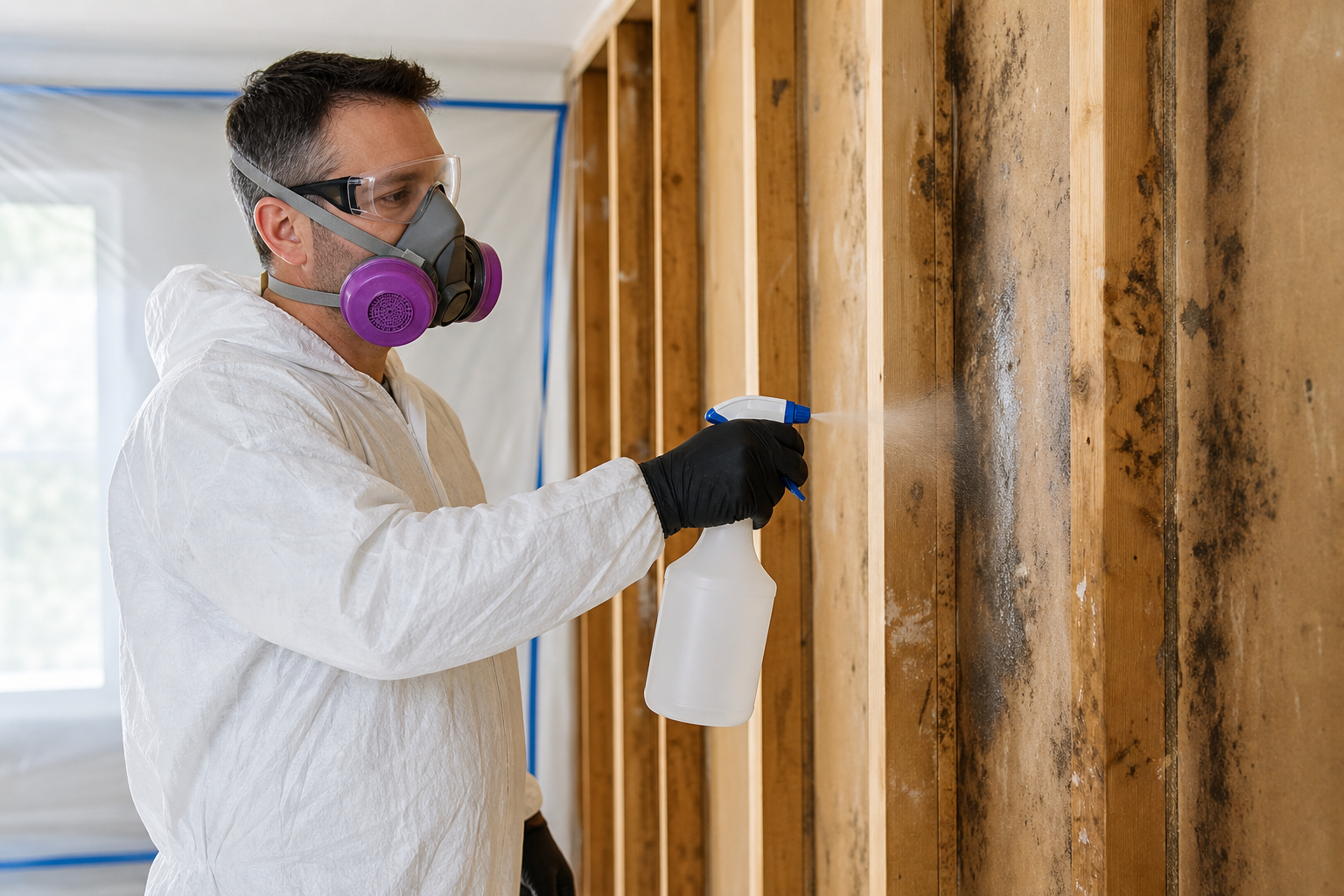
Antimicrobial treatment applies EPA-registered disinfectants and mold inhibitors to building materials after water extraction, mold removal, or sewage cleanup. The goal is to reduce microbial load on salvageable surfaces—studs, subfloors, concrete, and HVAC pathways—while materials finish structural drying.
Tucson projects use antimicrobials after Category 2 gray water from appliances and Category 3 sewage backups, and after mold remediation on wood framing in adobe-adjacent walls. Product selection follows label directions for porous vs. non-porous substrates—professional application is not the same as retail mold sprays.
When Antimicrobial Treatment Is Required
IICRC S500 recommends consideration of antimicrobials when contamination occurred, especially Category 2 and 3 water. Mold remediation on framing typically includes treatment after HEPA vacuuming. Clean Category 1 supply line breaks on hard surfaces may not need treatment if dried quickly— we assess case by case honestly.
Insurance scopes often line-item antimicrobial application—we document product, concentration, and contact time for claim support.
Application on Framing & Subfloors
After demo exposes studs and joists, surfaces are HEPA-vacuumed before spray or fog application. Contact time per label—often ten minutes or more—is observed, not rushed. Overspray in contained work zones protects adjacent clean areas.
OSB and plywood subfloors after pad removal receive treatment before new flooring—critical in slab-on-grade Tucson homes where water wicked through carpet into subfloor edges.
Sewage & Biohazard Disinfection
Category 3 events require disinfection meeting restoration industry standards. Antimicrobials with appropriate efficacy claims for bacteria and viruses apply after bulk contamination removal—not as substitute for removing saturated porous materials.
Odor removal often follows successful disinfection when organic residues linger in grout or structural pores.
HVAC & Duct Applications
Coils, drain pans, and accessible duct liner may receive approved products after mold or sewage contamination—always coordinated with mechanical cleaning first. Evaporative cooler pans and water trays benefit from seasonal antimicrobial maintenance to reduce algae odors.
System restart waits until treatment dries and filters are replaced—preventing distribution of chemical residue into occupied spaces.
Mold Prevention During Extended Drying
Large commercial losses in Tucson may dry over seven to ten days. Antimicrobial inhibitors on exposed framing add protection while dehumidifiers run—especially when monsoon humidity slows grain depression progress outdoors.
Treatment does not replace drying—wet wood will mold eventually without moisture removal regardless of chemical application.
Safety & Occupant Considerations
Occupants stay out of treated areas until products dry and ventilation clears airborne residue per SDS guidelines. We post treatment notices for commercial tenants and schedule around business hours when possible.
Products are selected for efficacy and compatibility with future paint, texture, and flooring adhesives—avoiding treatments that interfere with rebuild coatings.
Integration With Full Restoration
Antimicrobial treatment is one step in water damage restoration and mold remediation—paired with extraction, drying, and clearance testing via IAQ testing when required.
Documentation packages include product labels, application dates, and areas treated for property records and real estate disclosure in Arizona.
Product Categories & Efficacy Claims
EPA registers disinfectants with specific kill claims for bacteria and fungi—not all products suit porous wood. Mold inhibitors on framing differ from quaternary ammonium disinfectants on hard tile after sewage. We match label directions to substrate and contamination class rather than one-size-fits-all fogging marketed to consumers online.
Safety Data Sheets stay on job files for commercial clients and OSHA-conscious property managers. Application rates, PPE for applicators, and re-entry times follow manufacturer guidance—not shortened for convenience.
Fogging vs. Targeted Application
ULV fogging distributes product in wall cavities after demo when HEPA vacuum preceded application—fogging without cleaning is ineffective. Targeted spray on studs ensures contact time on vertical surfaces where gravity pulls liquid downward. Over-application wastes product and delays rebuild drying.
Duct fogging occurs only after mechanical cleaning removes bulk debris—otherwise product coats dust without reaching biofilm on coils.
Interaction With Paint & Rebuild
Some treatments require waiting periods before primer application— we note compatibility with common Arizona texture and paint systems contractors use. Incompatible sealers cause peel failures blamed on painters when root cause was chemical interaction with antimicrobial residue.
Dry standard must precede sealing or painting—treating wet wood traps moisture and guarantees mold return.
Documentation for Insurance & Health Departments
Line items list product name, application date, and areas treated—adjusters recognize MSD antimicrobial codes on Category 2 and 3 losses. Restaurants after sewage events show health inspectors treatment records alongside cleanup completion photos.
Homeowners receive copies for real estate disclosure when treatment followed major water loss—transparency supports resale in Pima County markets sensitive to mold history.
Local Expertise for Antimicrobial Treatment in Tucson
From Catalina Foothills and Oro Valley to Marana, Rita Ranch, Green Valley, and central Tucson barrios, Pima County homes combine stucco exteriors, slab foundations, evaporative coolers, and long cooling seasons that stress plumbing and roofing. Monsoon microbursts, AC condensate overflows, and vacant snowbird properties closed through humid summer weeks create moisture problems despite desert reputation for dryness. Antimicrobial Treatment in this environment requires contractors who understand adobe additions, foam flat roofs, rooftop package HVAC, and hard-water scale attacking copper lines—not generic national playbooks written for humid coastal climates.
We dispatch from greater Tucson with equipment sized for ranch homes, hillside multi-level builds, and commercial tenant spaces along Oracle, Grant, and Broadway corridors. Response targets 60–90 minutes for emergencies when crew capacity allows during monsoon surges affecting entire neighborhoods simultaneously.
Desert humidity swings and hard-water plumbing mean the same home can suffer AC condensate floods in August and pipe pinholes in January—we plan mitigation for year-round failure modes, not single-season shortcuts.
Standards, Documentation & Next Steps
Our work aligns with IICRC S500 water restoration and S520 mold remediation standards recognized by insurers, industrial hygienists, and property managers statewide. Daily moisture documentation, HEPA filtration, and correct water category handling separate professional mitigation from consumer fans-and-bleach attempts that spread contamination or leave wet cavities mold-ready within 72 hours. Whether you need insurance documentation, third-party clearance, or fast occupancy restoration, our process produces records adjusters and buyers recognize.
Call (520) 462-0491 for a free visual assessment and plain-language scope. We coordinate with extraction, drying, remediation, and air testing as your loss requires—one coordinated team across Pima County rather than conflicting vendors leaving gaps where mold and odor return next season.
Every job receives photo documentation, moisture readings where applicable, and written recommendations for preventing repeat damage—whether you are a homeowner in Sahuarita, a landlord near UA, or a facility manager overseeing multiple Pima County locations.
When Antimicrobial Treatment Is Required
Category 2/3 water, mold remediation, and exposed framing after demo need professional treatment.
Exposed Studs After Demo
Framing left untreated after mold or sewage demo risks regrowth during drying.
Category 2 or 3 Water Loss
Gray and black water events require professional disinfection beyond extraction.
Persistent Bacterial Odor
Smell after sewage cleanup suggests inadequate disinfection of porous-adjacent hard surfaces.
Extended Dry Times
Large losses benefit from mold inhibitors while dehumidification continues.
HVAC Contamination
Coils and pans after mold or sewage need cleaning plus approved treatment.
Insurance Scope Requirement
Adjusters often expect line-item antimicrobial documentation on contaminated losses.
Antimicrobial Application Process
Correct product, contact time, and documentation—not retail spray shortcuts.
Surface Preparation
HEPA vacuum and remove bulk contamination before any chemical application.
Product Selection
Choose EPA-registered disinfectant or inhibitor matched to contamination class.
Application & Contact Time
Spray, fog, or wipe per label with full dwell time observed.
Dry & Document
Ventilate treated areas, verify dryness, and record for insurance and clearance.
When Antimicrobials Are Needed
Contamination class and material exposure drive professional treatment decisions.
Category 3 Sewage Exposure
Pathogens on surfaces require registered disinfectant after material removal.
Mold on Salvageable Framing
HEPA cleaning plus treatment protects wood during rebuild waiting periods.
Slow Drying Large Losses
Extended moisture window increases regrowth risk without inhibitors.
HVAC Organic Loading
Coils and pans harbor biofilm treated with approved antimicrobials.
Gray Water Appliance Leaks
Dishwasher and washer lines contaminate cabinets and subfloors needing treatment.
Tucson Antimicrobial Treatment Experts
Professional disinfection after water, sewage, and mold losses.
Label-Compliant Application
Full contact times and concentrations per EPA registration—not guesswork.
Integrated Restoration
Same team handles extraction, treatment, and drying—consistent scope.
Insurance Line Items
Documented application supports adjuster review on covered losses.
Rebuild-Safe Products
Selections compatible with paints, textures, and flooring systems used locally.
Antimicrobial Treatment FAQs
Understanding post-loss disinfection in Tucson.
No—removal eliminates contaminated materials; treatment disinfects salvageable surfaces after cleaning.
Professionals use commercial-grade EPA registrations with equipment ensuring even coverage and documented contact time.
Yes, once surfaces dry and areas ventilate per product SDS— we advise re-entry timing on each job.
It reduces load on treated surfaces; mold returns if moisture returns—drying and source fix are essential.
Some clean Category 1 hard surface losses dried within hours may not require antimicrobials—we assess honestly.
Antimicrobial Service — Pima County
Treatment applications on residential and commercial losses metro-wide.
Sewage backups in central Tucson and mold remediation in Foothills homes generate steady antimicrobial application work integrated with drying crews.
Commercial kitchens and multi-family properties require after-hours treatment scheduling to meet health and tenant requirements.
Restoration Guides Related to Antimicrobial Treatment
Homeowners researching antimicrobial treatment in Tucson often need clear timelines, prevention steps, and insurance context. These guides complement our on-site IICRC-aligned work across Pima County.
Explore Our Tucson Restoration Resources
Browse services, local service areas, expert guides, and FAQ answers — organized to help homeowners, landlords, and property managers find the right next step fast.
Located in the Heart of Tucson
Our 5578 S Houghton Rd, Tucson, AZ 85747, USA base lets us reach Catalina Foothills, Oro Valley, Marana, and neighborhoods across Pima County quickly — day or night during monsoon season and every day of the year.