
Odor Removal Tucson, AZ
Cover sprays fail when odors live in drywall, ductwork, or wet wood. We find the source—mold, sewage, smoke, or dead pest intrusion—and treat with HEPA filtration, hydroxyl or ozone technology, and material removal when necessary.
Professional Odor Removal in Tucson Homes & Businesses
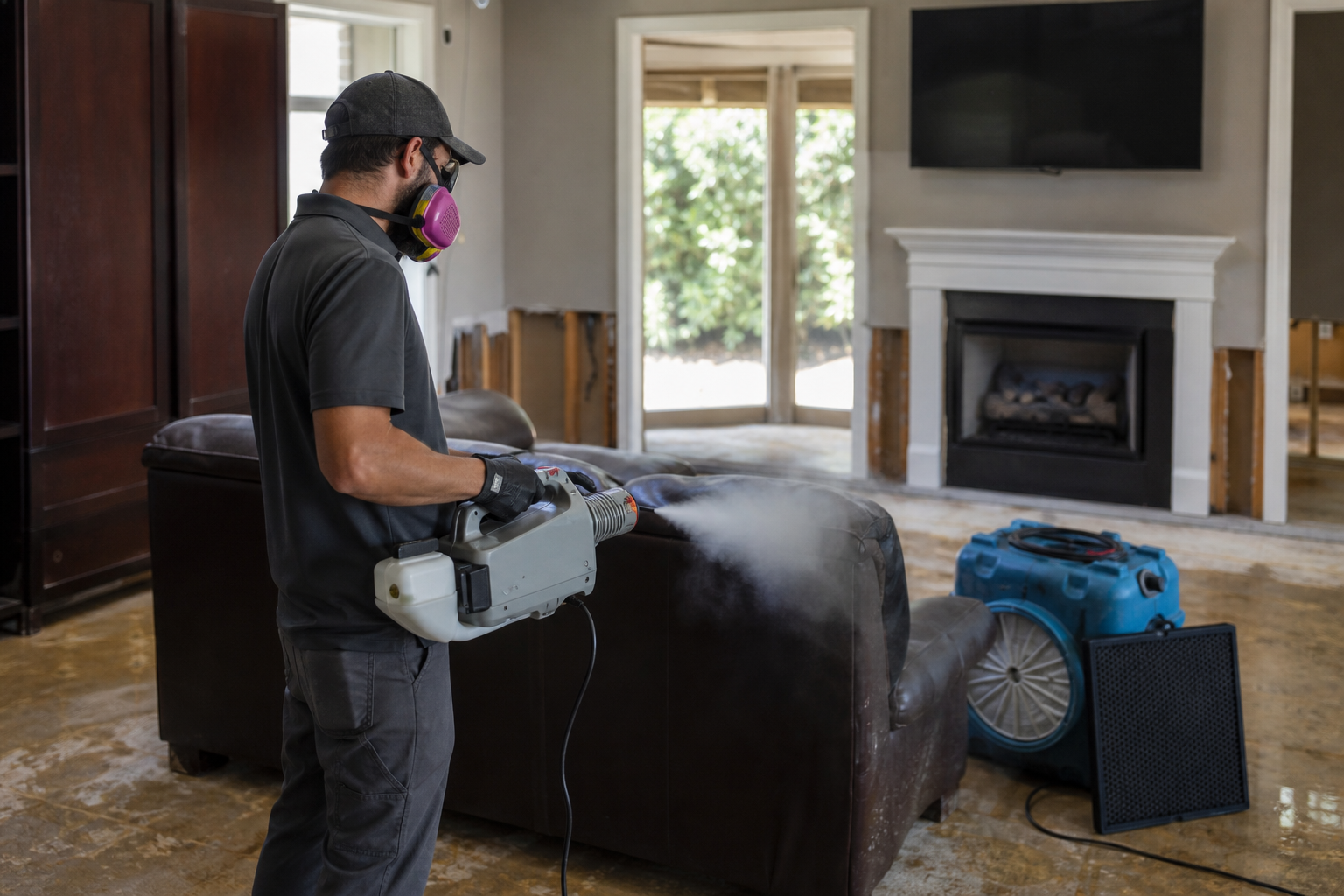
Persistent odors indicate contamination or residual chemistry in porous materials. Musty smells after monsoon leaks mean mold or wet wood—even when surfaces look dry. Sewage odors require sewage cleanup confirmation before odor treatment alone will work. Smoke and cooking odors embed in carpet and duct linings in older adobe rentals near the university.
Our process starts with inspection and moisture verification. Treating odor without fixing moisture is temporary. We integrate mold inspection when spores may be the source and structural drying when hidden wet materials keep releasing microbial volatile organic compounds.
Musty & Mold-Related Odors
Mold odors travel through HVAC systems common in Tucson—especially when evaporative coolers share duct paths or attic returns pull unfiltered air. HEPA air scrubbers reduce airborne spores while we remove affected drywall or treat framing with antimicrobial treatment.
Adobe and plaster retain earthy smells longer than standard drywall; sealing without confirming dryness traps odor permanently. Moisture meters guide whether removal or drying is the real fix.
Sewage & Category 3 Odors
Sewage backup leaves fatty acids and bacteria that penetrate porous materials. Non-porous tile may clean; carpet, pad, and lower drywall must often go. Odor treatment runs after biohazard remediation meets clearance standards.
Floor drain traps that dry out in vacant Green Valley winter homes allow sewer gas intrusion—a simple water refill fixes some cases; cracked drain lines need plumbing repair plus odor protocol.
Smoke & Fire-Related Odors
Wildfire smoke infiltration during Arizona fire season coats ductwork and textiles. Hydroxyl generators safely treat occupied spaces unlike high-concentration ozone during business hours. Content cleaning and duct access cleaning complement whole-structure treatment.
Kitchen and protein smoke in restaurants along Grant Road embeds in grease-laden surfaces—degreasing plus odor technology beats generic air fresheners.
Hydroxyl vs. Ozone Treatment
Hydroxyl radicals break odor molecules in occupied buildings with people and pets present when used per manufacturer safety guidelines—ideal for hotels and occupied homes in Catalina Foothills.
Ozone is powerful for vacant structures post-remediation but requires evacuation and material compatibility checks—some rubber and electronics are sensitive. We match technology to occupancy and odor type.
HVAC & Duct Odor Solutions
Musty air when cooling starts often means mold on coils or organic dust in return plenums. Filter upgrades, coil cleaning, and duct access cleaning integrate with whole-home air quality testing to verify improvement.
Swamp cooler pads and water distribution systems develop algae odors—we recommend seasonal pad replacement and line flushing as prevention.
Dead Pest & Hidden Decay Odors
Roof rat intrusion in attics is common in desert neighborhoods; decomposition odor penetrates insulation until source removal and HEPA vacuuming complete. We locate carcasses in soffits and wall voids using inspection cameras when needed.
After source removal, thermal fogging or hydroxyl treatment addresses residual odor in surrounding materials.
Verification & Prevention
Odor is subjective; we use before-and-after occupant walkthroughs plus optional air sampling when health concerns exist. Fixing grading, exhaust ventilation, and AC maintenance prevents return of musty smells after monsoon season.
Property managers receive written odor treatment summaries for tenant turnover files in Pima County rental portfolios.
Odor Chemistry in Desert Homes
Musty odors often come from microbial volatile organic compounds released by active or past mold—not just visible colonies. Sewage odors include sulfur compounds and fatty acids penetrating grout pores. Wildfire smoke leaves acidic particulates that reactivate when humidity rises during monsoon. Each chemistry needs different treatment—not one universal fogging product.
Swamp cooler organic dust plus moisture produces earthy smells mistaken for mold; inspection distinguishes biological growth from mineral and algae odor at cooler pads. Mold inspection when spores are suspected prevents treating odor symptoms while colonies grow in attic sheathing.
Treatment Technology Selection
HEPA air scrubbers reduce airborne particulate during and after treatment. Hydroxyl generators safely treat occupied spaces by breaking odor molecules over 24–72 hour runs. Ozone works in vacant structures with material compatibility review—rubber gaskets and some electronics may need removal before ozone. Thermal fogging reaches wall cavities when source contamination was removed but odor persists in pores.
We never promise instant results—odor treatment runs until occupant walkthrough confirms acceptable levels. Re-treatment without fixing moisture source fails; we document moisture correction before second odor round on Tucson callbacks.
Pet, Smoke & Cooking Odor Cases
Pet urine in subfloor and tack strip requires pad removal and enzyme or hydroxyl follow-up—surface carpet cleaning fails when contamination reached wood. Protein smoke from kitchen fires embeds in grease films common in older ductwork near busy arterial roads with exhausted restaurant vents.
Cigarette smoke in rental turnovers near campus housing often requires combination HEPA cleaning, sealant on drywall when necessary, and duct access cleaning before new tenants occupy. Landlords receive written odor treatment summary for lease files.
Post-Treatment Verification
Occupant smell tests remain primary verification for residential jobs. Commercial clients may request particle or spore testing when health codes require objective data. We schedule follow-up visits when HVAC systems were treated to confirm filters were replaced and no chemical residue odor remains at registers.
Preventive maintenance—proper bathroom exhaust, cooler pad replacement, and prompt water extraction after leaks—keeps odor treatment a one-time event rather than recurring expense across monsoon seasons in Pima County.
Local Expertise for Odor Removal in Tucson
From Catalina Foothills and Oro Valley to Marana, Rita Ranch, Green Valley, and central Tucson barrios, Pima County homes combine stucco exteriors, slab foundations, evaporative coolers, and long cooling seasons that stress plumbing and roofing. Monsoon microbursts, AC condensate overflows, and vacant snowbird properties closed through humid summer weeks create moisture problems despite desert reputation for dryness. Odor Removal in this environment requires contractors who understand adobe additions, foam flat roofs, rooftop package HVAC, and hard-water scale attacking copper lines—not generic national playbooks written for humid coastal climates.
We dispatch from greater Tucson with equipment sized for ranch homes, hillside multi-level builds, and commercial tenant spaces along Oracle, Grant, and Broadway corridors. Response targets 60–90 minutes for emergencies when crew capacity allows during monsoon surges affecting entire neighborhoods simultaneously.
Desert humidity swings and hard-water plumbing mean the same home can suffer AC condensate floods in August and pipe pinholes in January—we plan mitigation for year-round failure modes, not single-season shortcuts.
Standards, Documentation & Next Steps
Our work aligns with IICRC S500 water restoration and S520 mold remediation standards recognized by insurers, industrial hygienists, and property managers statewide. Daily moisture documentation, HEPA filtration, and correct water category handling separate professional mitigation from consumer fans-and-bleach attempts that spread contamination or leave wet cavities mold-ready within 72 hours. Whether you need insurance documentation, third-party clearance, or fast occupancy restoration, our process produces records adjusters and buyers recognize.
Call (520) 462-0491 for a free visual assessment and plain-language scope. We coordinate with extraction, drying, remediation, and air testing as your loss requires—one coordinated team across Pima County rather than conflicting vendors leaving gaps where mold and odor return next season.
Every job receives photo documentation, moisture readings where applicable, and written recommendations for preventing repeat damage—whether you are a homeowner in Sahuarita, a landlord near UA, or a facility manager overseeing multiple Pima County locations.
When Professional Odor Removal Is Needed
If odor persists after cleaning or returns when HVAC runs, source treatment is required.
Musty Smell When AC Runs
Often indicates mold on coils, ducts, or wet materials connected to airflow.
Odor Returns After Cleaning
Surface cleaning failed to address porous contamination or hidden moisture.
Sewage or Rotten Egg Smell
May indicate active backup, dry traps, or gas line issues—inspect immediately.
Smoke Smell After Fire Season
Wildfire particulates embed in textiles and ducts even without direct fire damage.
Persistent Closet or Bathroom Odor
Poor ventilation plus past leaks create chronic microbial odor sources.
New Tenant Complaints
Documented odor treatment protects landlords during deposit disputes.
How We Remove Odors in Tucson
Treat the source, then the air—technology plus building science.
Source Investigation
Moisture meters, visual inspection, and history review identify odor cause.
Contamination Removal
Remove or clean affected materials—sewage, mold, or smoke residue.
Advanced Odor Treatment
HEPA scrubbing, hydroxyl or ozone, and targeted sealers when appropriate.
Verification & Prevention Plan
Confirm odor reduction and recommend ventilation or plumbing fixes.
Where Tough Odors Come From
Masking sprays fail when contamination remains in Tucson construction materials.
Hidden Mold & Moisture
Wet framing and drywall emit MVOCs until dry and remediated.
Sewage Contamination
Category 3 water leaves persistent bacterial odors in porous materials.
HVAC Biofilm & Dust
Organic buildup on coils and ducts smells when humidified air passes through.
Wildfire Smoke Infiltration
Fine particulates cling to fabrics and duct linings across the metro.
Poor Exhaust Ventilation
Bathroom and kitchen fans that vent into attics trap humid, odorous air.
Odor Removal That Actually Lasts
No perfume cover-ups—real elimination for Pima County properties.
Source-First Philosophy
We fix moisture and contamination before running odor machines.
Safe Occupied Treatment
Hydroxyl options for homes and businesses that stay open during treatment.
Integrated Restoration
Mold, water, and sewage teams coordinate—one vendor, consistent results.
Desert HVAC Expertise
We understand cooler and split-system odor pathways unique to Tucson.
Odor Removal FAQs
Common questions about eliminating stubborn smells.
Ozone requires vacancy and material precautions. We often use hydroxyl in occupied Tucson homes instead.
Simple cases may resolve in one day; whole-home treatment after fire or sewage can take three to seven days.
Not if moisture source is fixed. Unfixed leaks will bring odor back regardless of treatment.
Yes, when subfloor contamination is addressed—pad removal and enzyme or hydroxyl treatment as needed.
Consumer purifiers help maintenance; embedded odors in materials need professional source treatment.
Odor Removal Across Tucson
Residential and commercial odor treatment throughout Pima County.
Musty vacation homes in Oro Valley and smoke-impacted properties after regional wildfires keep our odor teams busy year-round alongside post-water-loss calls from monsoon season.
Restaurants, hotels, and property managers receive discrete, documented odor remediation with minimal downtime.
Restoration Guides Related to Odor Removal
Homeowners researching odor removal in Tucson often need clear timelines, prevention steps, and insurance context. These guides complement our on-site IICRC-aligned work across Pima County.
Explore Our Tucson Restoration Resources
Browse services, local service areas, expert guides, and FAQ answers — organized to help homeowners, landlords, and property managers find the right next step fast.
Located in the Heart of Tucson
Our 5578 S Houghton Rd, Tucson, AZ 85747, USA base lets us reach Catalina Foothills, Oro Valley, Marana, and neighborhoods across Pima County quickly — day or night during monsoon season and every day of the year.