Quick answer: Professional water extraction removes bulk water with truck-mounted and portable extractors, then structural drying uses dehumidifiers and air movers until moisture meters confirm materials hit dry standard. Tucson homes need cavity inspection—not just surface drying—because stucco walls and slab construction trap moisture.
Extraction Before Drying—Always
Water extraction is the highest-impact first step in any loss. Removing bulk water mechanically is hundreds of times more efficient than evaporating it with dehumidifiers alone. Every gallon left in carpet pad requires exponentially more energy and time to pull from the air later.
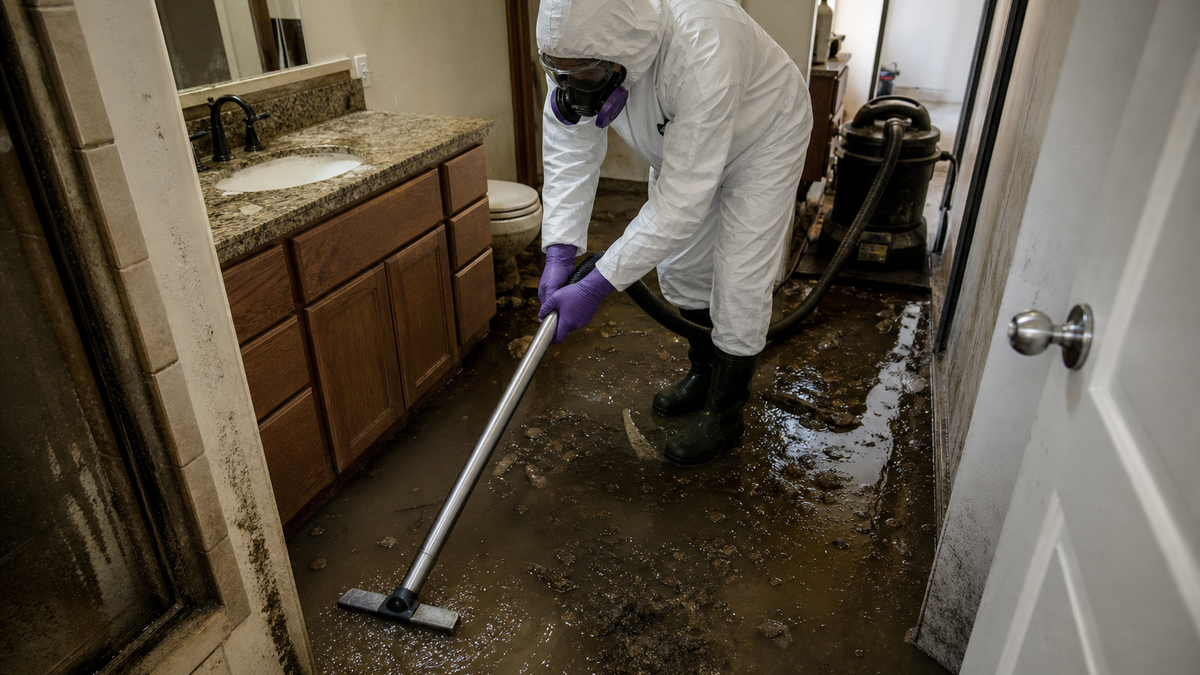
Truck-mounted extractors generate deep vacuum on carpet and hard surfaces simultaneously. Light wand passes on weighted carpet compress pad against subfloor, releasing trapped water shop vacs never reach. Multiple passes continue until extraction yields minimal yield—technicians measure progress, not guess.
Portable extractors access bathrooms, closets, and second floors where truck mounts cannot reach. Combined with squeegee wands on tile and concrete, they remove standing water from monsoon garage flooding before it wicks into shared wall drywall with the house.
Extraction includes hard-floor squeegeeing, carpet floating when appropriate, and injection drying for subfloor systems—not just visible puddles. Skipping thorough extraction extends dry times and increases mold risk across Tucson slab-on-grade construction.
Portable extraction on stairs and multi-level homes prevents water migration to lower levels—second-floor supply line breaks in two-story Sahuarita homes require upper level extraction before lower ceiling drying begins to stop ongoing supply from wet carpet on stairs.
Tucson restoration professionals serving Oro Valley, Marana, Green Valley, and central Pima County apply these principles daily on extraction before drying—always scenarios—local field experience matters as much as national IICRC standards when desert construction behaves differently from humid-climate textbooks.
Moisture Mapping Defines the Scope
Penetrating and non-penetrating moisture meters map migration into drywall, framing, and subfloors. Thermal imaging cameras reveal cool wet zones behind stucco and under tile that meters then confirm quantitatively—essential before placing drying equipment.
Documentation at day one establishes baseline readings for insurance and dry-standard comparison at job completion. Adjusters reviewing Tucson claims expect numeric logs—not verbal assurances that walls feel dry.
Mapping identifies hidden wet zones: HVAC closet shared walls, toe kicks under kitchen cabinets, and carpet-over-slab edges in laundry rooms. Missing these zones causes callbacks when mold appears weeks after equipment left while cavities stayed wet.
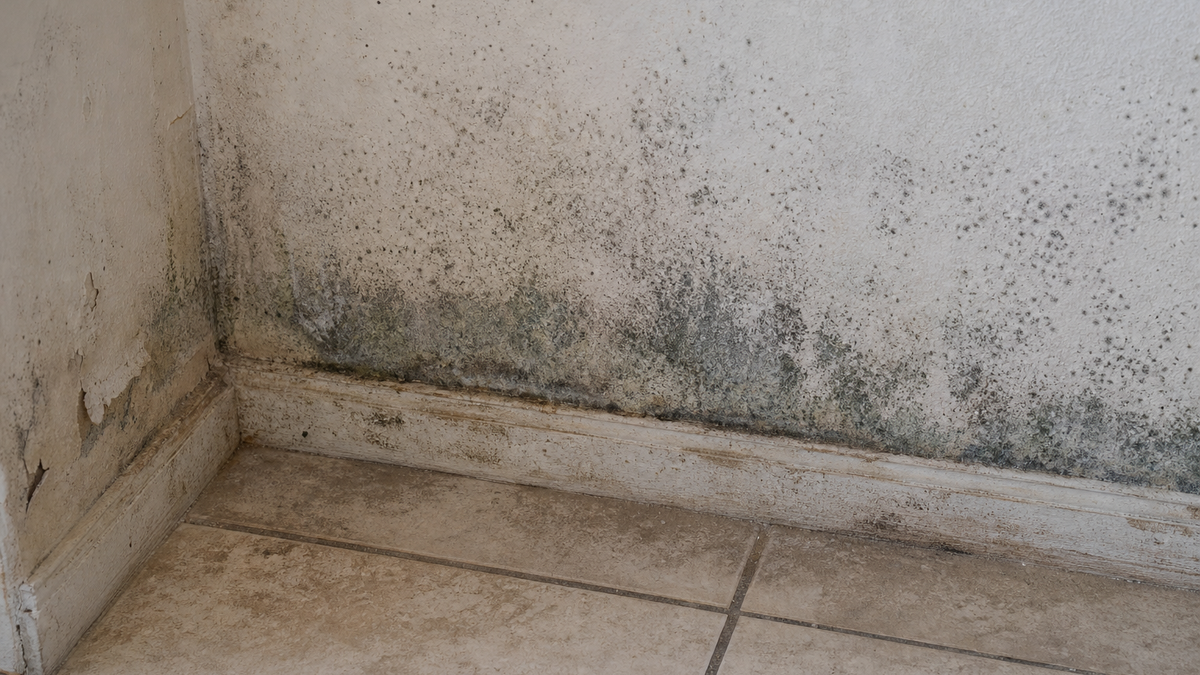
Mold inspection may accompany mapping when visible growth or musty odor predates extraction. Knowing contamination boundaries before drying prevents spreading spores through aggressive airflow in the wrong sequence.
Pin-type meters on drywall without baseboard removal may miss wet bottom plates—baseboard removal or small inspection holes at floor line confirm whether wicking requires flood cut on walls that exterior paint appears dry on after quick surface wipe-down by homeowners.
Tucson restoration professionals serving Oro Valley, Marana, Green Valley, and central Pima County apply these principles daily on moisture mapping defines the scope scenarios—local field experience matters as much as national IICRC standards when desert construction behaves differently from humid-climate textbooks.
Drying Equipment and Placement Strategy
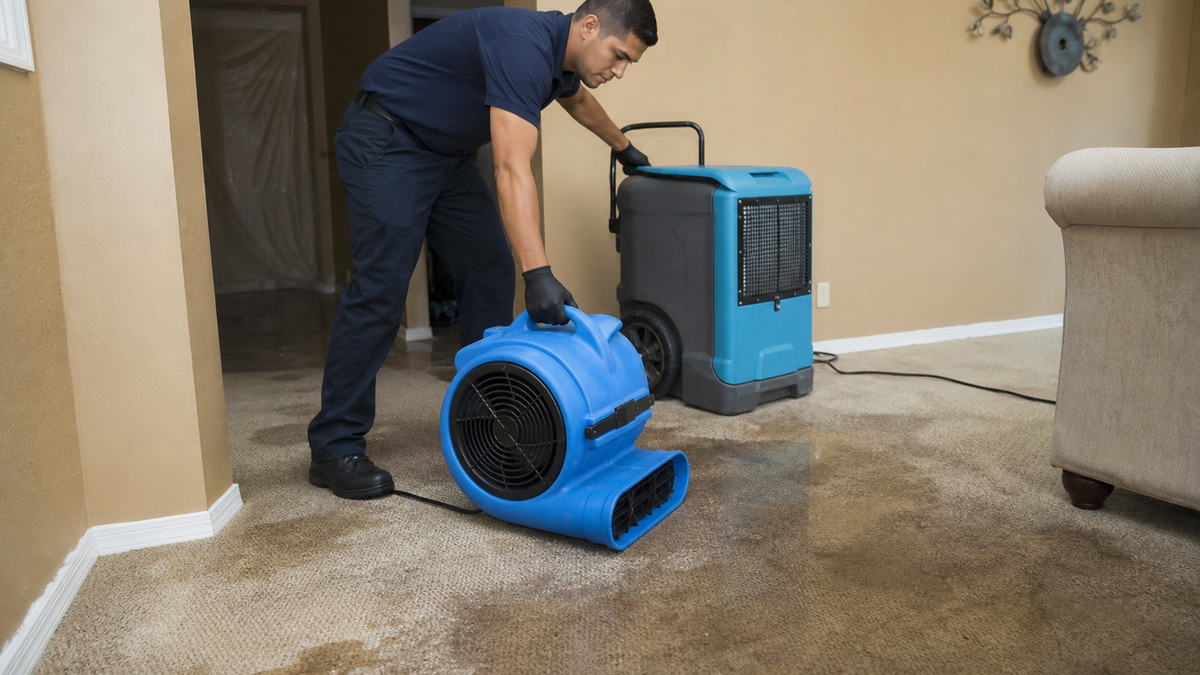
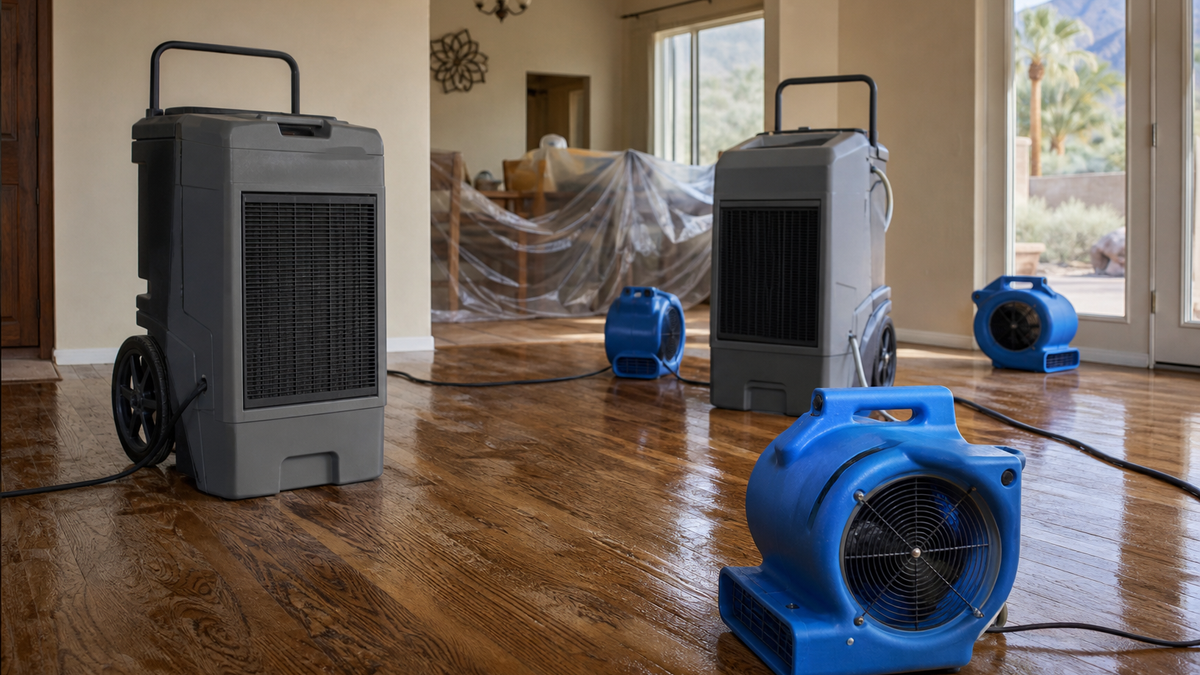
Structural drying combines low-grain refrigerant or desiccant dehumidifiers with axial or centrifugal air movers. Dehumidifiers pull water vapor from air; air movers increase evaporation rate from wet surfaces into that air—both are required, not interchangeable.
Equipment calculations follow IICRC guidelines based on cubic footage, class of water absorption, and dehumidifier capacity at Arizona climate conditions. Monsoon humidity reduces dehumidifier efficiency—jobs started in August often need more capacity than identical losses in April.
Air movers aim across wet surfaces in consistent direction, not randomly toward rooms. Flood-cut wall cavities get directed airflow through stud bays; wet ceilings may need directed drying from below and above when attic insulation was affected by roof leaks.
Injectidry systems and floor drying mats address hardwood, tile-over-slab, and subfloor cavities without full demolition when contamination category allows. These specialty tools prevent buckling in Catalina Foothills custom hardwood installations when extraction was prompt.
Containment during drying isolates wet zones from unaffected areas when demolition is not yet required—poly barriers with dehumidifier ducting inside containment improve grain depression where open floor plan homes would otherwise dilute dehumidifier capacity across excessive cubic footage.
Tucson restoration professionals serving Oro Valley, Marana, Green Valley, and central Pima County apply these principles daily on drying equipment and placement strategy scenarios—local field experience matters as much as national IICRC standards when desert construction behaves differently from humid-climate textbooks.
Dry Standards and When to Remove Equipment
Wood framing targets roughly 12 to 16 percent moisture content depending on species and local baseline—technicians compare to unaffected areas of the same home when possible. Drywall is dry when meter readings stabilize near reference dry zones, not when paint looks normal.
Daily monitoring adjusts equipment placement as readings drop. Dehumidifiers run until grain depression goals are met consistently—not removed because occupants feel impatient on day two while stud bays remain elevated.
Category 3 losses may require removal of materials that cannot hit dry standard without demolition—wet insulation and contaminated drywall come out rather than chasing impossible in-place dry times on porous biohazard materials.
Final readings are documented before equipment pull. Rebuild contractors should receive moisture logs confirming dry standard—installing drywall over wet framing violates every professional standard and guarantees mold behind new walls.
Equilibrium moisture content varies seasonally in Tucson—technicians compare affected framing readings to unaffected framing in same home rather than generic national charts that ignore local ambient humidity differences between dry May and humid August monitoring dates.
Tucson restoration professionals serving Oro Valley, Marana, Green Valley, and central Pima County apply these principles daily on dry standards and when to remove equipment scenarios—local field experience matters as much as national IICRC standards when desert construction behaves differently from humid-climate textbooks.
Still Wet After Mopping?
Surface dry is not structural dry. Our moisture mapping finds hidden water before mold starts—extraction and commercial drying across Pima County.
Call NowTucson-Specific Drying Challenges
Stucco-over-frame walls slow evaporation from interior cavities because exterior stucco traps moisture inside stud bays. Flood cuts and directed airflow are often mandatory—exterior appearance of dry stucco means nothing about interior framing moisture.
Adobe and plaster homes in historic neighborhoods dry through earthen mass slowly. Rushing rebuild before earthen walls equilibrate causes efflorescence and plaster failure—not just mold risk on furring strips behind finished surfaces.
Slab-on-grade wicking pulls water under walls into multiple rooms from a single laundry leak. Meters on baseboards in adjacent hallways reveal migration invisible on the laundry floor alone—a daily pattern in Rita Ranch and Oro Valley ranch homes.
Vacant properties with AC off during drying season need active dehumidification regardless of outdoor desert dryness. Closed hot interiors with wet materials create steam-chamber conditions perfect for mold in Green Valley summer-vacant condos.
Tile-over-slab in bathrooms requires grout line extraction and extended drying—water trapped under tile membrane systems may require tile removal when moisture meters on adjacent drywall show persistent elevation weeks after visible bathroom floor appeared dry to homeowner touch tests.
Tucson restoration professionals serving Oro Valley, Marana, Green Valley, and central Pima County apply these principles daily on tucson-specific drying challenges scenarios—local field experience matters as much as national IICRC standards when desert construction behaves differently from humid-climate textbooks.
Monitoring Technology and Remote Reporting
Wireless moisture sensors and hygrometers log conditions continuously in large commercial losses and vacant residential jobs. Alerts when humidity spikes notify technicians if dehumidifiers fail during power outages—common during monsoon storms.
Photo documentation accompanies daily readings for insurance files. Adjusters thousands of miles away approve continued equipment rental when logs show clear downward moisture trends—not when homeowners claim two fans should be enough.
Psychrometric charts track grain depression and vapor pressure differentials on complex jobs—technical proof that drying science is applied, not arbitrary equipment running for billing purposes.
Insurance claim assistance packages daily reports so carriers understand why day four still needs dehumidifiers—preventing premature authorization denials that leave materials wet and mold colonizing.
Cloud-connected hygrometers alert technicians when power loss stops equipment on vacant snowbird properties—remote alerts dispatch crew to restart dehumidifiers after monsoon outage before 48-hour mold window expires in Green Valley condos left empty during July humidity spikes.
Tucson restoration professionals serving Oro Valley, Marana, Green Valley, and central Pima County apply these principles daily on monitoring technology and remote reporting scenarios—local field experience matters as much as national IICRC standards when desert construction behaves differently from humid-climate textbooks.
Common Drying Failures We Correct
Fans without dehumidifiers move humid air around during monsoon season without removing moisture—a classic DIY failure when rooms feel breezy but materials stay wet and mold follows within days.
Removing equipment when carpet surface feels dry while pad and subfloor remain elevated—moisture meters catch what bare feet cannot on slab construction throughout Pima County tract housing.
Drying without flood cuts when water wicked into wall cavities—closed wall systems trap moisture until mold breaks through paint months later, turning a drying invoice into full remediation scope.
Running central HVAC as primary drying strategy without capacity or filtration adequate for active water loss—normal AC cannot achieve grain depression needed for structural drying and may spread contamination on Category 2 and 3 losses.
Pointing box fans at walls without dehumidification during monsoon season increases indoor humidity—fans accelerate evaporation into air that already holds moisture, depositing water on previously dry ceiling surfaces in same room during failed DIY drying attempts.
Tucson restoration professionals serving Oro Valley, Marana, Green Valley, and central Pima County apply these principles daily on common drying failures we correct scenarios—local field experience matters as much as national IICRC standards when desert construction behaves differently from humid-climate textbooks.
Cost, Timeline, and Value of Professional Drying
Typical residential drying runs three to seven days with equipment rental and daily monitoring included in mitigation scope. Whole-home monsoon losses and multi-room supply line breaks extend longer—meters determine completion, not flat-rate promises.
Professional drying costs fraction of mold remediation, drywall replacement, and content loss after failed DIY attempts. Insurance often covers mitigation when reported promptly—penny-wise fan rental without dehumidification is pound-foolish when mold develops.
Water damage restoration companies coordinate extraction, drying, demolition when needed, and rebuild referrals—continuity prevents gaps between trades where moisture monitoring stops and mold begins.
Ask contractors for daily moisture logs and equipment inventory in writing. Reputable Tucson restorers welcome transparency—evasive answers about dry standard targets are a red flag before you authorize equipment in your home.
Insurance may cover reasonable equipment rental duration shown by logs—homeowners who remove professional equipment early to save daily rental fees often absorb full mold remediation cost out of pocket when carriers deny mold coverage citing inadequate mitigation timeline documentation.
Tucson restoration professionals serving Oro Valley, Marana, Green Valley, and central Pima County apply these principles daily on cost, timeline, and value of professional drying scenarios—local field experience matters as much as national IICRC standards when desert construction behaves differently from humid-climate textbooks.
Frequently Asked Questions
The Bottom Line
Water extraction and structural drying are paired sciences—extract bulk water first, then dry materials to verified standard with commercial dehumidifiers and air movers. Tucson stucco cavities, slab wicking, and monsoon humidity make moisture mapping and daily logging non-negotiable for successful outcomes.
Surface dry misleads countless homeowners every monsoon season. Meters, not intuition, determine when equipment comes off and rebuild begins. Professional drying costs far less than mold remediation caused by premature equipment removal or fans-only DIY attempts.
If water affected more than a small tile area, call for extraction and documented structural drying immediately. Your adjuster, your framing, and your family breathe easier when drying is done right the first time.
Across Rita Ranch, Oro Valley, and central Tucson, we routinely salvage homes that called within the first twenty-four hours—and remediate homes where DIY drying stopped too early. The difference is almost always measured moisture data, not luck.