
Quick answer: After monsoon flooding, ensure electrical safety, stop additional intrusion, photograph damage, call for professional extraction within hours, treat water as Category 3 if street runoff or mud entered the home, remove wet porous materials, and begin structural drying before the 48-hour mold window closes.
Safety First: Electricity, Contamination, and Structural Risk
Do not enter standing water until you know electricity is off to affected areas. Flip breakers if safe from a dry location, or wait for utility guidance. Monsoon floodwater often contacts outlets, appliance cords, and HVAC equipment before you see the depth at the doorway.
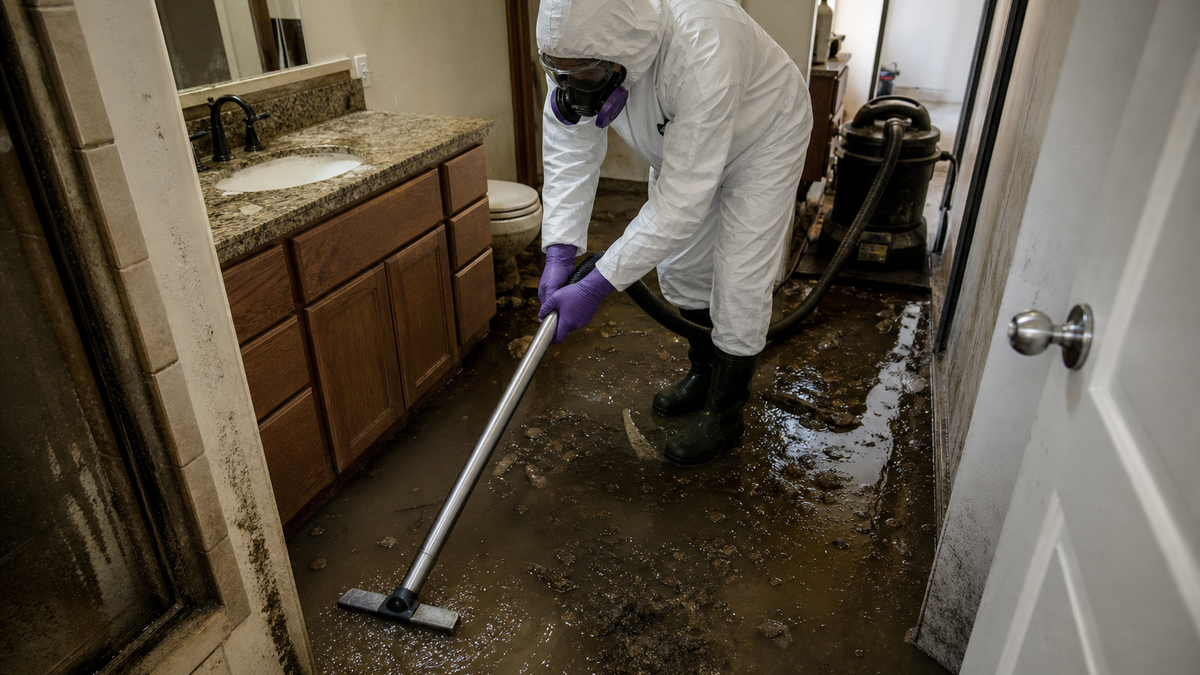
Assume floodwater from streets, washes, and yards is Category 3 black water—contaminated with bacteria, chemicals, and organic debris. Wear rubber boots and gloves if you must enter briefly to shut off water or move valuables. Keep children and pets completely out of affected zones.
Check for ceiling sagging, buckling walls, and mud-loaded drywall that may collapse when touched. Flat roofs in Oro Valley and Marana may hold ponding water above saturated ceiling tile—poke only from a safe distance and call professionals if structural integrity is uncertain.
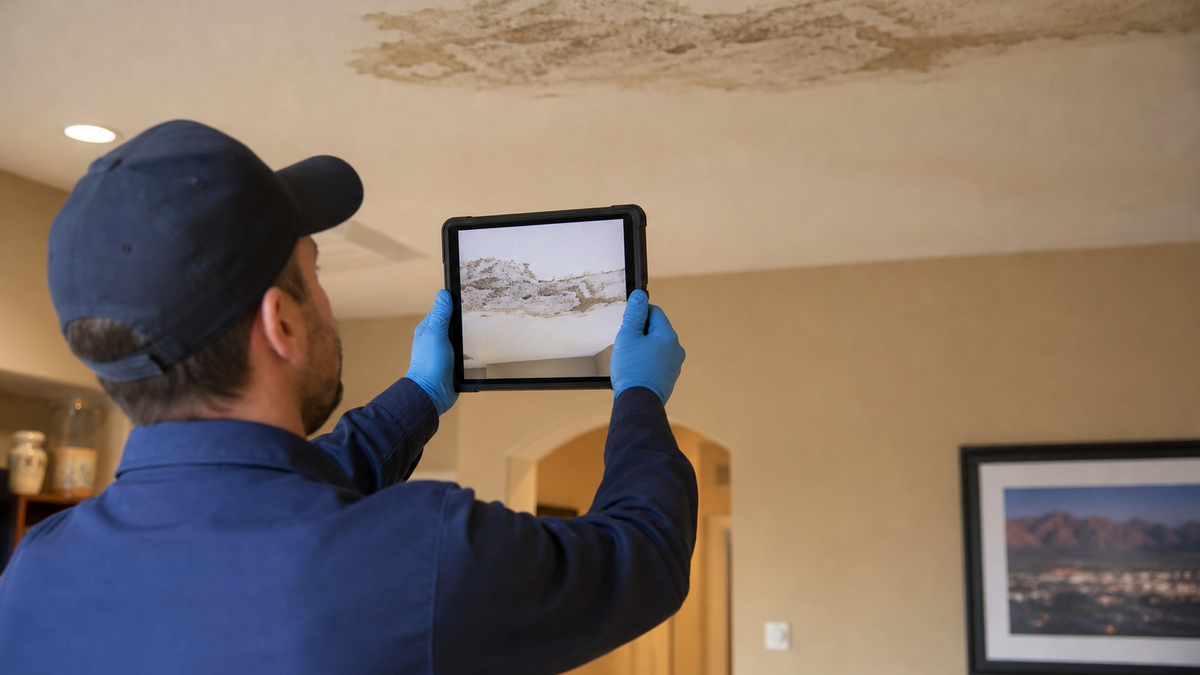
Document conditions with photos and video before moving anything for insurance. Capture water lines on walls, mud depth, and damaged contents from multiple angles. Timestamped images support claims adjusters who cannot visit until storm queues clear.
Gas line leaks after flooding require utility shutoff before extraction begins—odor of gas near flooded laundry rooms with water heaters supersedes water urgency; evacuate and call utility emergency line before restoration crews enter if gas smell is present.
Tucson restoration professionals serving Oro Valley, Marana, Green Valley, and central Pima County apply these principles daily on safety first: electricity, contamination, and structural risk scenarios—local field experience matters as much as national IICRC standards when desert construction behaves differently from humid-climate textbooks.
Stop Additional Water From Entering
Sandbag door thresholds if storms continue, tarp roof punctures from fallen limbs, and clear debris from patio drains so new rain can exit. Temporary measures buy time until permanent repairs—especially on foam roofs where hail and wind opened seams during the same cell.
Redirect sheet flow away from slab entries with temporary berms or landscape edging. Monsoon runoff across hardscape often enters garages first, then migrates into hall carpet and drywall through the house-to-garage door bottom seal.
Shut off irrigation systems—automatic sprinklers running during recovery add clean water to already contaminated zones and confuse insurance documentation about loss source and category.
Storm restoration crews arrive with tarps, board-up materials, and extraction equipment together so temporary sealing and water removal happen in one mobilization rather than waiting for a roofer while water spreads.
Window well flooding in basement-level bedrooms rare in Tucson but present in foothills walk-out basements—clear window well drains during storms to prevent glass seepage into lower levels below grade on Skyline area custom homes with multi-level drainage complexity.
Tucson restoration professionals serving Oro Valley, Marana, Green Valley, and central Pima County apply these principles daily on stop additional water from entering scenarios—local field experience matters as much as national IICRC standards when desert construction behaves differently from humid-climate textbooks.
Call for Professional Extraction Immediately
Truck-mounted water extraction removes hundreds of gallons per hour from carpet, tile grout lines, and hard surfaces. Consumer shop vacs cannot keep pace with mud-laden water and burn out quickly on debris. Every hour of delay lets water wick higher into drywall and insulation.
Technicians classify water category on arrival and adjust PPE and disposal protocols accordingly. Street floodwater in Flowing Wells and Pueblo Gardens low points is treated as Category 3 from the start—no waiting for lab results while porous materials stay wet.
Furniture on wet carpet should be blocked or moved to dry areas if safe—metal tabs under legs prevent stain transfer. Leave heavy content manipulation to crews with lifting equipment when contamination is present; dragging wet sofas across dry rooms spreads bacteria.
Garage and carport flooding often soaks shared wall drywall with the house. Inspect both sides of common walls and HVAC closets near garage entries—hidden wetting there causes mold odors that appear weeks after the visible floor was mopped dry.
Weighted carpet extraction passes increase yield on saturated wall-to-wall after monsoon intrusion—technicians perform multiple passes from different directions until extraction meter shows minimal pickup before installing air movers against still-wet pad assemblies.
Tucson restoration professionals serving Oro Valley, Marana, Green Valley, and central Pima County apply these principles daily on call for professional extraction immediately scenarios—local field experience matters as much as national IICRC standards when desert construction behaves differently from humid-climate textbooks.
Category 3 Cleanup Protocols for Monsoon Runoff
Sewage backup protocols overlap heavily with outdoor flood intrusion. Porous materials—carpet, pad, lower drywall, insulation, and cardboard contents—that contacted muddy runoff are typically removed and bagged, not dried in place.
Hard surfaces like sealed concrete and tile may be cleaned with appropriate agents after bulk water removal. Grout lines and expansion joints trap silt that harbors bacteria if not agitated and extracted properly—surface mopping alone is insufficient for monsoon mud.
HVAC systems that ingested floodwater or mud require inspection before restart. Return plenums sitting in wet garage closets spread contamination room to room the moment the thermostat calls for cooling during August heat.
Contents decisions happen item by item: salvageable non-porous goods are cleaned off-site when possible; porous furnishings that absorbed black water are usually documented and discarded with carrier approval to prevent recurring odor and microbial growth.
Yard chemicals and automotive fluids in street floodwater vary by neighborhood—industrial-adjacent areas near I-10 frontage may warrant enhanced PPE and disposal documentation beyond standard Category 3 residential protocols when runoff composition is uncertain.
Tucson restoration professionals serving Oro Valley, Marana, Green Valley, and central Pima County apply these principles daily on category 3 cleanup protocols for monsoon runoff scenarios—local field experience matters as much as national IICRC standards when desert construction behaves differently from humid-climate textbooks.
Flooded After Tonight's Monsoon?
We respond 24/7 across Pima County with extractors, contamination protocols, and insurance documentation. Do not wait until morning—mold starts on wet drywall overnight.
Call NowControlled Demolition and Structural Drying
Flood cuts remove lower drywall to expose wet stud bays for cleaning, drying, and inspection. Height depends on water migration—often 12 to 24 inches minimum, higher when wicking reached outlets or insulation was saturated in exterior walls.
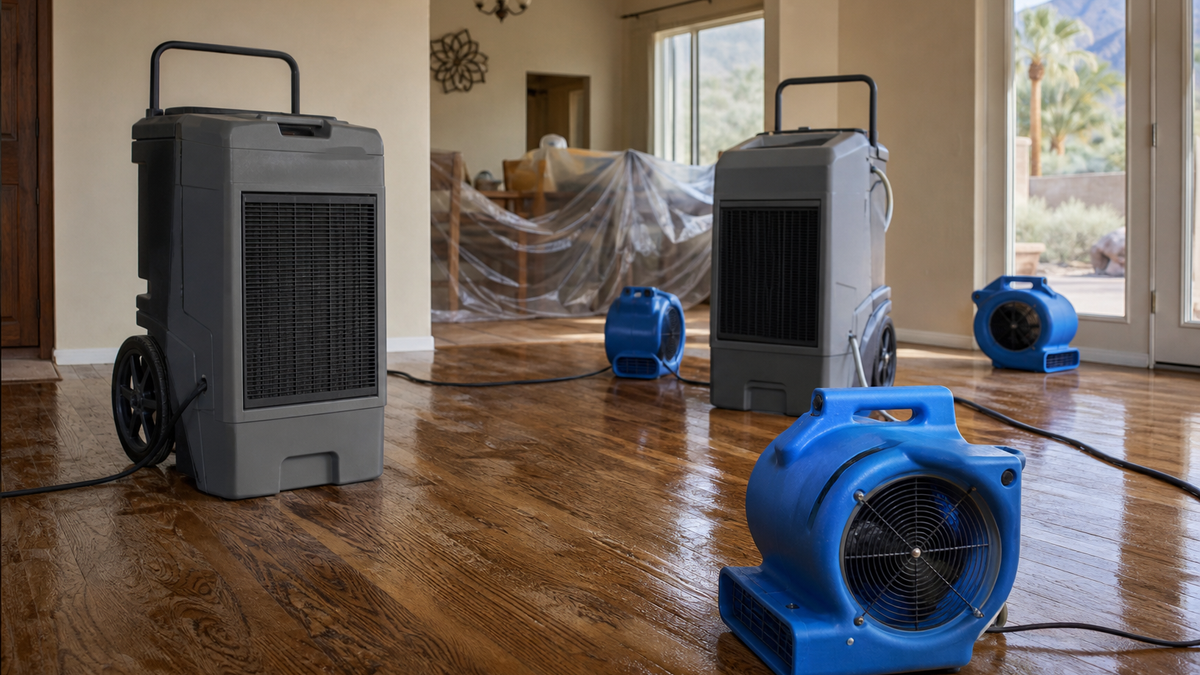
Structural drying with commercial dehumidifiers and air movers runs until wood framing returns to established dry standard for Tucson. Mud inside wall cavities must be removed before sealing—drying over trapped silt leaves a permanent odor and microbe reservoir.
Slab-on-grade homes wick moisture through expansion joints and cracks. Moisture meters on baseboards and lower studs confirm whether flood water traveled under walls into adjacent dry rooms that looked untouched on day one.
Antimicrobial treatment on exposed framing may follow cleaning when Category 3 water contacted wood—but never replaces removal of contaminated drywall and insulation that cannot be sanitized in place per IICRC S500 guidance.
Subfloor OSB on raised entries swells after Category 3 flooding—replacement often required before tile reinstall even when framing dries to standard, because delamination compromises floor system integrity independent of mold colonization on surface fibers.
Tucson restoration professionals serving Oro Valley, Marana, Green Valley, and central Pima County apply these principles daily on controlled demolition and structural drying scenarios—local field experience matters as much as national IICRC standards when desert construction behaves differently from humid-climate textbooks.
Insurance Documentation During Flood Cleanup
Report claims promptly—even if adjusters are backlogged after regional monsoon events. Most policies require reasonable mitigation to prevent further damage. Waiting days because neighbors are also flooded is not an excuse carriers accept when mold develops.
Insurance claim assistance includes daily moisture logs, equipment inventories, photo narratives, and line-item scopes formatted for Pima County adjusters familiar with monsoon loss patterns. Incomplete documentation is the top reason flood claims stall or shrink.
Save samples of damaged materials only when adjusters request them—otherwise rely on photos and written scope. Do not begin major rebuild until carrier approves mitigation scope unless policy language allows emergency work reimbursement.
Track additional living expenses if displacement is covered—hotel receipts, meal differentials, and storage costs add up during multi-week dry-outs of whole first floors in Catalina Foothills homes with extensive custom finishes.
Civil authority evacuation orders during regional flooding support additional living expense claims when documented—save news alerts and county emergency notifications linking displacement to declared flood conditions affecting your specific Tucson neighborhood access routes.
Tucson restoration professionals serving Oro Valley, Marana, Green Valley, and central Pima County apply these principles daily on insurance documentation during flood cleanup scenarios—local field experience matters as much as national IICRC standards when desert construction behaves differently from humid-climate textbooks.
Beating the 48-Hour Mold Window After Floods
Monsoon floods hit when outdoor humidity is already elevated—exactly when indoor drying is slowest without professional dehumidification. The 48-hour mold colonization window applies even during desert monsoon season if materials stay wet.
Do not ventilate with open windows during humid storm weeks unless technicians direct it—you may import moisture faster than fans remove it. Closed drying with dehumidifiers and targeted airflow outperforms desert myths about air-drying flooded drywall.
Mold remediation becomes the scope when drying starts late or hidden cavities were missed. Prevention through fast extraction and documented drying is always cheaper than post-flood mold removal across multiple rooms.
Schedule follow-up moisture checks before reinstalling drywall. Rebuild over damp framing guarantees mold behind new walls before the next monsoon season—a failure mode we remediate too often in rental properties with rushed cosmetic repairs.
Power restoration after monsoon outages may restart dehumidifiers automatically if on backup circuits—homes with only whole-house surge protection may lose drying equipment silently during overnight storms; battery backup or generator hookups protect mitigation investment on large losses.
Tucson restoration professionals serving Oro Valley, Marana, Green Valley, and central Pima County apply these principles daily on beating the 48-hour mold window after floods scenarios—local field experience matters as much as national IICRC standards when desert construction behaves differently from humid-climate textbooks.
Preparing Before the Next Monsoon Hits
Clear scuppers, roof drains, and downspouts each June. Trim limbs overhanging flat roofs. Verify garage door seals and landscape grading that directs sheet flow away from slab entries—not toward them.
Know your main water shutoff and keep carrier claim numbers accessible. Pre-arrange who you will call for emergency extraction so you are not searching reviews at 2 a.m. while water rises in the laundry room.
Consider backflow valves on swamp cooler supply lines and check AC condensate drains before July—secondary leaks during flood recovery compound Category 3 losses with clean-water migration from neglected HVAC maintenance.
Review policy flood and sewer backup endorsements now. Monsoon runoff entering through doors may be treated differently from wash flooding or sewer reverse flow—understanding coverage before loss reduces disputes when adjusters classify water sources.
Reverse grade toward foundation from patio additions and pool deck retrofits causes recurring monsoon pooling—correct landscaping before storm season rather than relying on sandbags each July when permanent grading fixes eliminate repeat garage intrusion entirely.
Tucson restoration professionals serving Oro Valley, Marana, Green Valley, and central Pima County apply these principles daily on preparing before the next monsoon hits scenarios—local field experience matters as much as national IICRC standards when desert construction behaves differently from humid-climate textbooks.
Frequently Asked Questions
The Bottom Line
Monsoon flood cleanup in Tucson demands speed, safety awareness, and correct water category handling. Treat outdoor runoff as contaminated, extract professionally within hours, remove wet porous materials that cannot be sanitized, and dry with commercial equipment until meters prove framing is ready for rebuild.
Documentation supports insurance during regional storm backlogs when adjusters cannot visit immediately. Photo logs and moisture charts prove you mitigated diligently—critical when carriers question mold that appears after delayed or DIY drying attempts.
Prepare before the next microburst: clear drains, know your shutoffs, and save emergency contacts. The homes that recover fastest are not luckier—they act in the first hours while water is still water, not yet mold.